In-Vitro Results: ~50% Methane Reduction (Preliminary)
SeaTrace™ SC-1 has demonstrated approximately 50% reduction in enteric methane in preliminary in-vitro rumen fermentation assays, while maintaining total VFA production. In-vivo validation is planned for Q4 2026 at Seoul National University Pyeongchang.
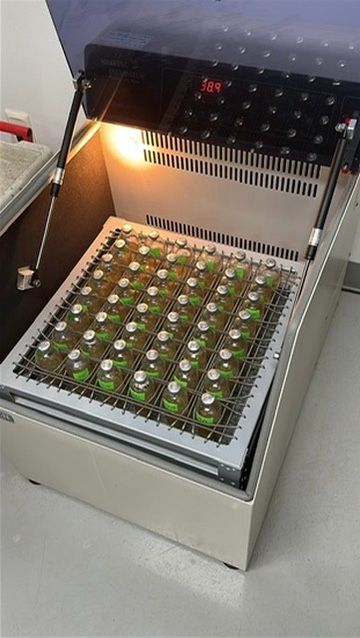
In-Vitro Rumen Fermentation Assay
Standardised batch-culture in-vitro fermentation assay conducted under controlled anaerobic conditions with 24-hour incubation. Full methodology is documented in our KIPO patent filing.
Key Fermentation Parameters: SeaTrace™ SC-1 vs. Control
| Fermentation Parameter | Control (no additive) | SeaTrace™ SC-1 | Direction vs. Control | Evidence Tier |
|---|---|---|---|---|
| Total CH₄ (methane gas) | Baseline (100%) | ~50% of control | ↓ ~50% | GREEN |
| Total VFA (volatile fatty acids) | Baseline | No significant difference | → Maintained | GREEN |
| Acetate (C2 VFA) | Baseline | Slight decrease (not significant) | → Stable | GREEN |
| Propionate (C3 VFA) | Baseline | Increased proportion | ↑ Enriched | GREEN |
| Butyrate (C4 VFA) | Baseline | No significant difference | → Maintained | GREEN |
| NDF digestibility (fibre) | Baseline | No significant difference | → Preserved | GREEN |
| Rumen pH (end-point) | Baseline (~6.8) | Within normal range | → No adverse shift | GREEN |
| In-vivo CH₄ (live animal) | — | Planned Q4 2026 | Under investigation | YELLOW — Pending |
Data represent mean of triplicate preliminary in-vitro assay runs. GREEN = consistent in-vitro finding. YELLOW = in-vivo study ongoing. Exact data available upon request to qualified partners.
What These Results Mean for the Industry
The Global Methane Pledge targets 30% reduction by 2030. A ~50% in-vitro result provides sufficient efficacy headroom to translate to commercially meaningful in-vivo effects even accounting for real-animal variability.
Products that suppress VFA production reduce animal energy intake and feed efficiency, making them commercially unviable for farmers. SeaTrace™ SC-1's maintained VFA profile and elevated propionate (preliminary in-vitro) indicates it does not compromise animal nutrition.
The simultaneous rise in propionate proportion confirms that hydrogen is being redirected rather than wasted, corroborating the theoretical dual mechanism (archaea inhibition + H₂→propionate pathway).
These in-vitro results support AENON's ongoing IP and regulatory activities. Full data packages are available to qualified research and commercial partners upon request.
Next Step: In-Vivo Validation
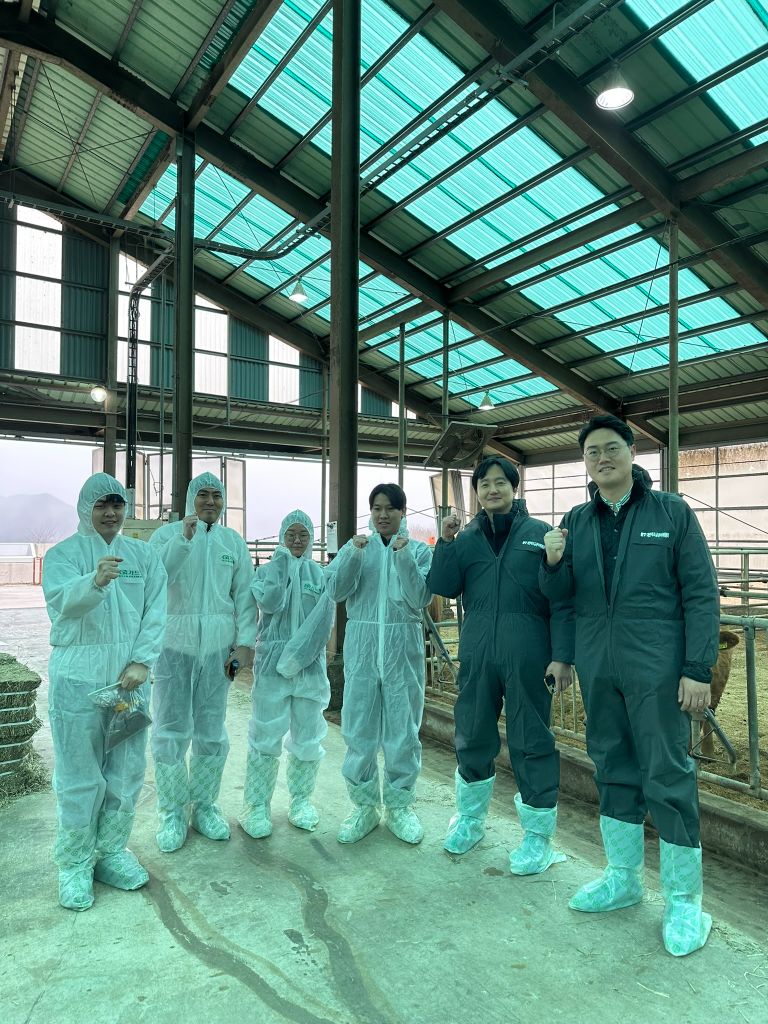
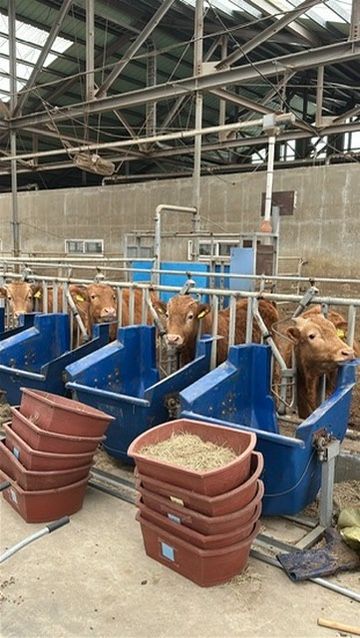
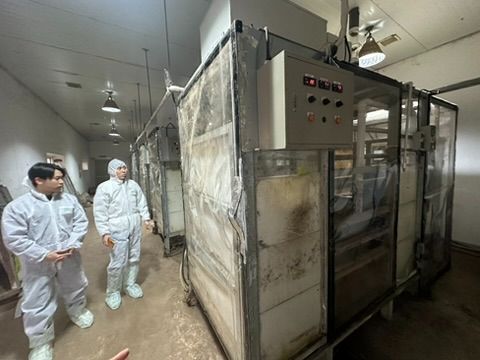
AENON team and SNU Pyeongchang research staff during site visit. Respiration chambers, individual feeding stations, and laboratory analysis infrastructure confirmed for in-vivo trial execution.
- ▸6-head crossover design
- ▸Respiration chamber methane measurement
- ▸Cattle at SNU Pyeongchang research farm
- ▸Primary endpoint: CH₄ (g/kg DMI)
- ▸Secondary: feed intake, FCR, BW
- ▸Institution: Seoul National University Pyeongchang
- ▸Site visit: Completed (AENON team + SNU staff)
- ▸Trial start: Q4 2026
- ▸Duration: 8–12 weeks per period
- ▸YELLOW — Under Study
In-vivo results are classified as YELLOW (under study). Claims about in-vivo efficacy, carbon credit equivalence, or per-animal economic benefit will be updated only upon completion of peer-reviewed in-vivo data. Do not cite in-vivo numbers from this page — they do not yet exist.